Hello, I'm

Jesper
Lindmarker

I research how people sort into partnerships and what that reveals about social boundaries. I also teach quantitative methods and have a background in running businesses.

PhD Candidate & Lecturer at Linköping University, where I teach statistics and data science in the master's programme in Computational Social Science.

Jesper Lindmarker

Assortative mating
& ethnic boundaries

Funded by a three-year Swedish Research Council project grant (5 MSEK).

01

Opportunity vs. preference

Observed partner choices reflect both opportunity — who you can meet, shaped by segregation, group size, proximity — and preference — who you choose, shaped by cultural affinity and social norms. My dissertation addresses this distinction using counterfactual methods that ask: what would we observe if ancestry or education didn't matter?

A key finding: apparent integration (rising intermarriage) can mask stable or even strengthening preferences — an integration paradox.

02

Space & segregation

Partners tend to live near each other before they meet. This spatial dependence links the uneven distribution of social groups to patterns of assortative mating. I study how residential propinquity — measured at 100-meter resolution — mediates ethnic endogamy.

It turns out that failing to account for where people live overstates ethnic boundaries by 20–40% for some groups. Segregation and preferences are deeply entangled.

03

Methods & data

I use Swedish population registers covering all residents — full-population data with geocoded addresses. My primary tools are conditional logit discrete choice models, two-sided matching simulations, and simulation-based decomposition methods.

These approaches compare observed unions to counterfactual partner draws, separating structural constraints from preference-like residuals.

Papers

Published · European Journal of Population, 2025

Cohabitation and Mortality Across the Life Course

A longitudinal cohort study with Swedish register-based sibling comparisons

Jesper Lindmarker, Martin Kolk & Sven Drefahl

Using Swedish register data for 2012–2017 covering 5.6 million individuals, this study investigates how cohabitation relates to mortality across the life course. Sibling fixed-effects models account for family-of-origin confounding. Cohabitation reduces mortality risk relative to being single, though the association is weaker than for marriage and varies by age and previous marital history.

Preprint · SocArXiv

However Far Away? The Spatial Contingencies of Assortative Mating

Propinquity and ethnic endogamy in Sweden, 1990–2017

Jesper Lindmarker & Benjamin F. Jarvis

This study examines how the spatial segregation of ethnic groups contributes to patterns of ethnic endogamy. Conditional logit models applied to Swedish population registers compare observed unions to counterfactual draws from the available pool of singles. Proximity strongly predicts partnering, but ancestry assortativity matters too, particularly for non-Western groups. Mediation analysis shows that failing to account for propinquity overstates endogamy by 20–40 percent for these groups. Presented at PAA 2025 and INAS 2023.

Working paper

2,500 Ethnic Boundaries in Sweden

A simulation-based analysis of assortative mating using register data

Jesper Lindmarker & Carl Nordlund

The first systematic mapping of ethnic assortative mating at the ancestry-group level in Sweden, analyzing 2,500 gender-specific pairings across 50 ancestry groups in unions formed between 1991 and 2022. A two-sided matching simulation accounts for opportunity structures. The results reveal seven clusters reflecting geographic and cultural proximity, with strongest endogamy among Horn of Africa and MENA groups and pronounced gender asymmetries.

Working paper

Three Decades of Ethnic Assortative Mating in Sweden

Decomposing trends into structural change and assortativity dynamics

Jesper Lindmarker

Interethnic unions have risen in Sweden, but is this driven by changing preferences or simply by growing diversity? Using simulation-based decomposition of 30 years of register data, this paper shows that observed exogamy rises are largely driven by structural change — more diversity in the partner market — while net-of-opportunity endogamy preferences have remained stable or even strengthened for some groups.

In progress

Working Together, Living Together?

Institutional co-membership, residential proximity, and educational assortative mating

Jesper Lindmarker

How much of educational homogamy reflects preferences versus opportunity? This study decomposes educational assortative mating into components attributable to residential proximity, shared workplaces, and shared universities. Proximity and institutional overlap together mediate 29–40% of educational homogamy among medium- and highly-educated pairs. Institutional effects follow a dose–response pattern: each additional year of overlap substantially increases union probability.

In the news

Dagens Nyheter wrote about my research: "Färre par träffas på jobbet".

Background

2027 — Upcoming

Postdoctoral Researcher

Institute for Analytical Sociology, Linköping University

Three-year position funded by the Swedish Research Council to study how residential segregation shapes social boundaries through partner choice. Starting after PhD defense in December 2026.

Now
2021 — 2026

PhD Candidate & Lecturer

Institute for Analytical Sociology, Linköping University

Dissertation on assortative mating in Sweden — using discrete choice models, matching simulations, and full-population register data to study how opportunity structures and preferences jointly shape partner formation across ethnic and educational lines.

Course responsible and main lecturer for Statistics & Data Science II in the MSc programme in Computational Social Science. The course covers regression, causal inference, logistic models, and discrete choice analysis. Also supervised master's theses in quantitative methods.

Presented at international conferences including PAA (Population Association of America) and INAS (International Network of Analytical Sociology).

2009 — 2022

The Castle Coworking

Founder & Manager, Stockholm

Founded and managed two coworking spaces over thirteen years — first a church, then a castle next to the Royal Palace. At its peak: 1,500 sqm, 300 members, and the highest Google rating among coworking spaces in Stockholm.

The project was an experiment in organisational design as much as a business. Inspired by Frederic Laloux's work on self-managing organisations and ideas from developmental psychology, the Castle operated with distributed decision-making, transparent finances, and a deliberate effort to hold a community that cut across industries, nationalities, and professional backgrounds. The community side was shaped by involvement in the Burning Man movement and its principles of participation and radical inclusion.

Running the Castle for over a decade meant dealing with everything from commercial leases and staffing to event production and community conflict — practical experience in leading organisations where structure has to be designed, not inherited.

We also threw some memorable parties.

The Castle — coworking space in Stockholm
2012

The Cookbook Adventure

Author & Project Lead

Crowdfunded and led a journey by car from Stockholm to Ulan Bator — 15,000 km through 16 countries. Along the way, we documented recipes and food stories from the people we met. The result was a cookbook published in 2014, combining photography, personal essays, and home cooking from Turkey to Mongolia.

The project involved everything from crowdfunding campaigns and logistics to writing, editing, and working with publishers. Read the digital copy or open the full map.

2010 — 2014

GreenCup

CEO & Co-founder

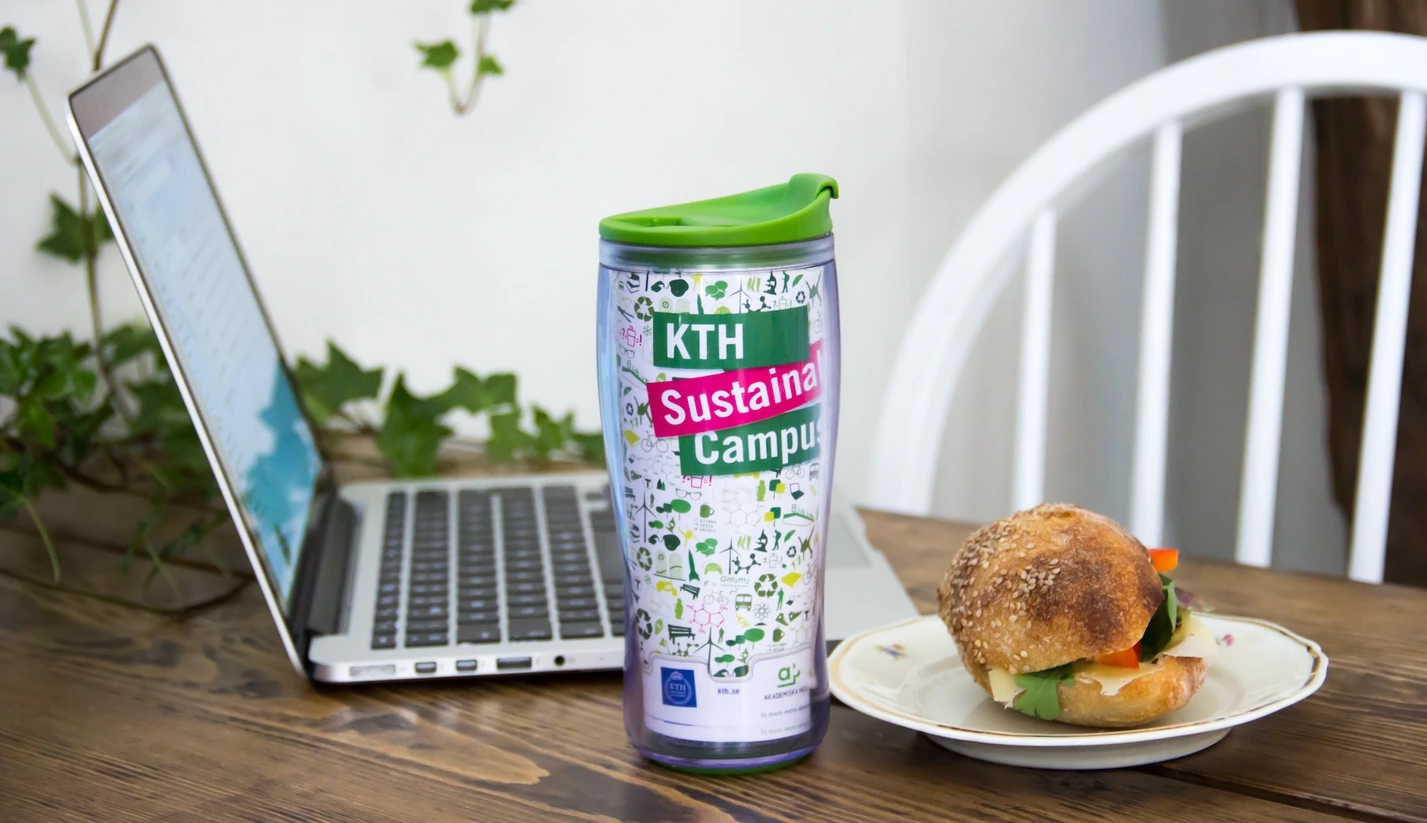
Built a company around reducing disposable cup waste on university campuses. Designed a reusable cup system with deposit logistics, partnered with campus cafés, and scaled to over 15,000 cups in active use at Linköping University and KTH.

An early venture that taught lessons in product design, supply chain management, and the gap between good ideas and operational reality.

GreenCup — sustainable campus cup

Statistics & Data Science II

I am course responsible and main lecturer for this course in the MSc programme in Computational Social Science at Linköping University. The course runs from OLS regression through to causal inference and discrete choice models. All lecture slides are available below.

Let's talk

For research collaboration, questions, or anything else.